Your agent now has its own real database — so it can track, organize, and build on your business instead of forgetting it.

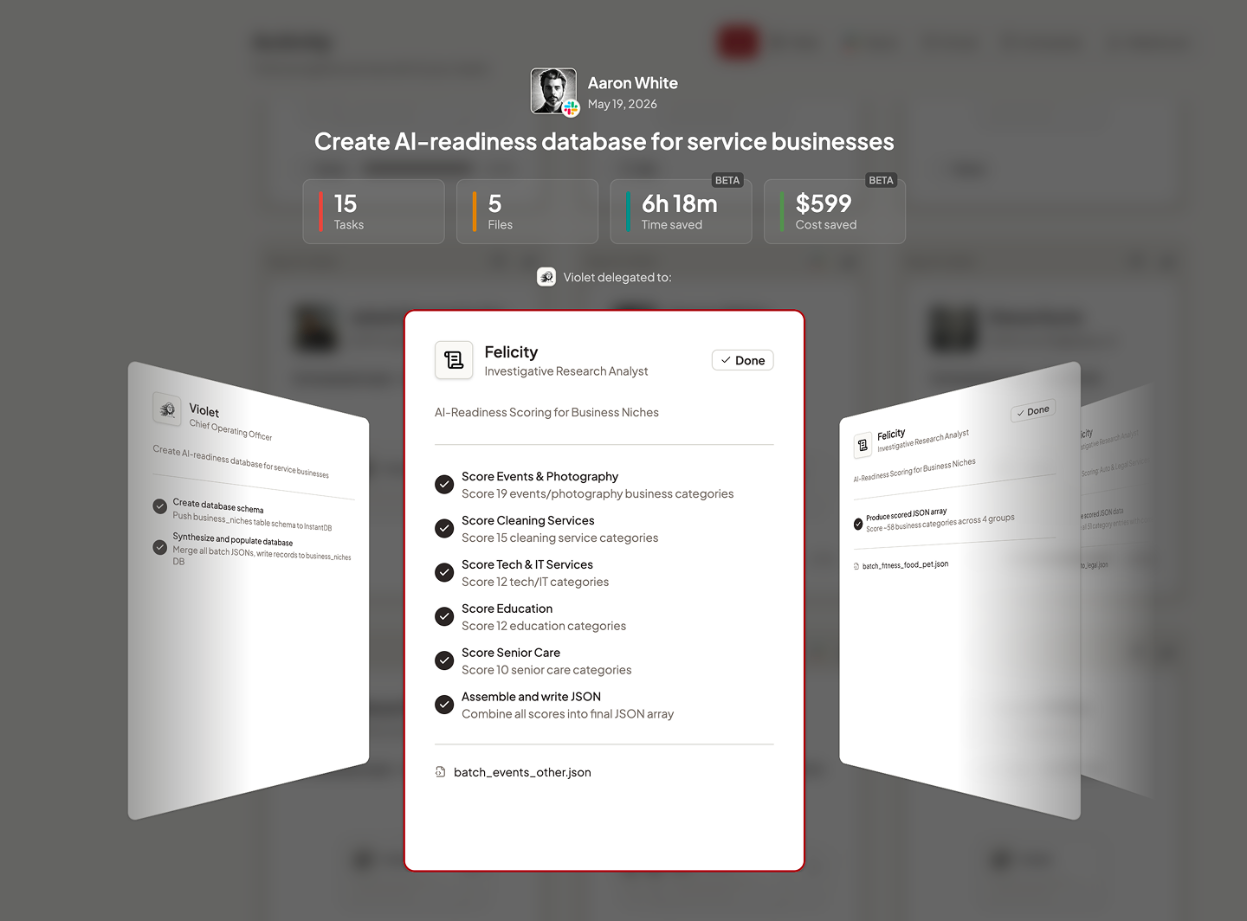
A lead comes in at 11 a.m. You mean to log it. A project slides to the next stage; you mean to update it somewhere. An order ships; you mean to note it. Then the day swallows you whole, and the record never gets written. You're running the business out of your memory and a tangle of half-finished spreadsheets.
A chat assistant can help you draft a reply about that lead. But the moment the conversation ends, it forgets the lead ever existed. The structure is still yours to carry.
What if your agent didn't just talk about your business but actually kept the books on it? Real records. Real tables. Something that remembers.
Key Takeaways
A database turns your agent from a conversation into a system. It stores information in proper tables and pulls it back whenever you need it, so the work you do today is still there next week. Log 50 leads this month, and next month the agent can tell you which ones never got a follow-up. The data sticks around because it lives in real records, not in the memory of a single chat.
The agent does the filing for you. Tell it what happened, and it writes the record — a new customer, an inventory change, a project that moved to the next phase. The information lands in the right table, in the right row, and you never open a spreadsheet to do it by hand. A structured picture of your business builds itself as a byproduct of talking to your agent.
Structured data means the agent can reason over it. Ask which projects are overdue, which products are running low, or which applicants haven't heard back, and it queries its tables to answer. It isn't summarizing a chat history. It's reading your records and telling you what's true. That's the line between a helpful assistant and a tool you run the operation on.
What can I track in a database?
Anything that belongs in records: customers, inventory, projects, applications, leads, and more. If you'd put it in a spreadsheet, your agent can manage it in a proper table.
Do I need to set up the tables myself?
No. Tell your agent what you want to track, and it creates the structure. You work in plain conversation while the agent handles the records.
Can the agent update existing records, or only add new ones?
Both. The agent reads from its tables, writes new rows, and updates the ones already there as the business changes.
How is this different from the agent just remembering our chats?
A chat eventually forgets. A database is permanent, structured storage the agent can query and build on, so your information stays organized and retrievable for as long as you need it.
Related Updates
Stop running your business out of your head. Give your agent a database, and a conversation that forgets becomes software that remembers, organizes, and grows alongside you. Learn more in the Help Center